
The short version
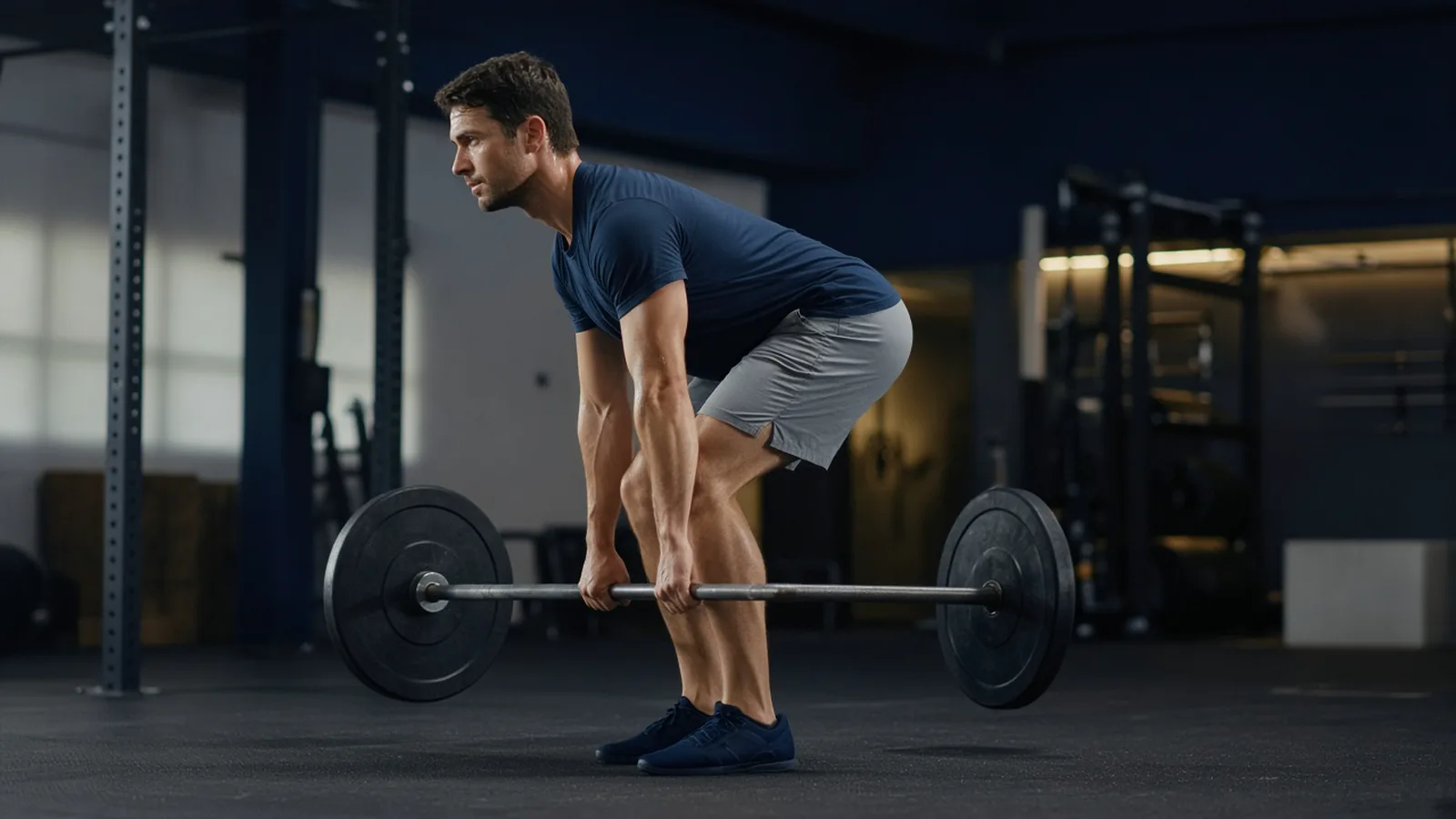
- Hips back, like closing a car door with your bum.
- Avoid: Rounding the lower back. Fix: Stop higher; range will grow.
- Start with: Hip hinge to a wall
Muscles worked
| Main movers | Hamstrings, glutes |
|---|---|
| Helpers (synergists) | Spinal erectors, upper back, grip |
| Equipment | Barbell or dumbbells |
Step by step
- Stand tall holding the weight in front of your thighs, feet hip-width.
- Unlock the knees slightly and keep them there.
- Push your hips back, sliding the weight down your thighs.
- Stop when you feel a strong hamstring stretch or your back would round, usually mid-shin.
- Drive hips forward to stand tall.
Coaching cues
- Hips back, like closing a car door with your bum.
- Weight stays close to the legs.
- Long spine from head to tailbone.
Common mistakes and fixes
- Rounding the lower back. Fix: Stop higher; range will grow.
- Bending the knees into a squat. Fix: Fix the knee bend at the start.
- Weight drifting forward. Fix: Drag it along the thighs.
Make it easier (regressions)
- Hip hinge to a wall
- Light dumbbell RDL
- Kettlebell deadlift from a block
Make it harder (progressions)
- Barbell RDL
- Single-leg RDL
- Slow 3-second lowering
Sets, reps and today’s dose
3 sets of 8–10, twice a week.
Test your eye in Spot the Fault and set your lifting rhythm with the tempo drill.
Lesson game · earn XP
Check yourself: 3 quick questions
Perfect score = combo bonus. Each question returns in your spaced-repetition review.
Questions people ask
RDL vs deadlift?
The RDL starts from standing and keeps knees mostly fixed; a conventional deadlift starts from the floor with more knee bend.
Should I feel it in my back?
You should mainly feel the hamstrings and glutes. Back strain usually means rounding or too much weight.
Sources
- U.S. HHS. Physical Activity Guidelines for Americans, 2nd edition (2018). Checked October 23, 2026.
- American College of Sports Medicine. Progression models in resistance training for healthy adults. Med Sci Sports Exerc, 2009. Checked October 23, 2026.
- NSCA. Exercise technique articles and Essentials of Strength Training and Conditioning. Checked October 23, 2026.
Education only. Not medical advice. Confirm with your clinician.