
The short version
- Chest proud, weight close.
- Avoid: Heels lifting. Fix: Limit depth or put small plates under the heels while mobility improves.
- Start with: Chair squat (see squat basics)
Muscles worked
| Main movers | Thighs (quadriceps), glutes |
|---|---|
| Helpers (synergists) | Adductors, core, upper back |
| Equipment | One dumbbell or kettlebell |
Step by step
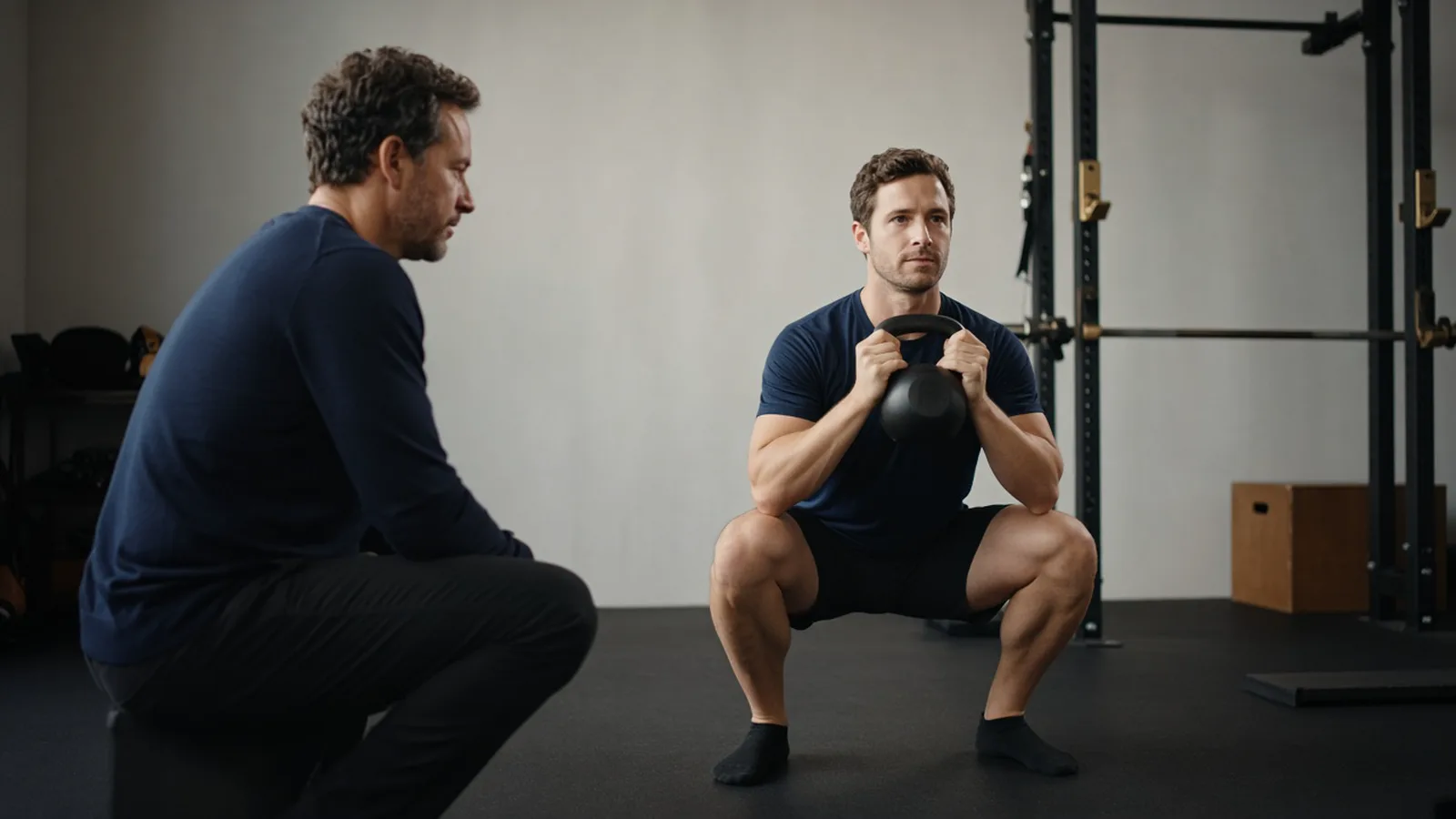
- Hold a dumbbell vertically at your chest, elbows under the weight.
- Stand feet shoulder-width, toes turned out slightly.
- Brace and sit down between your heels.
- Let elbows track inside the knees at the bottom.
- Drive through the whole foot to stand.
Coaching cues
- Chest proud, weight close.
- Knees follow toes.
- Whole foot stays down.
Common mistakes and fixes
- Heels lifting. Fix: Limit depth or put small plates under the heels while mobility improves.
- Weight drifting away from the chest. Fix: Keep elbows down and the bell glued to you.
- Knees caving. Fix: Push knees out over the toes.
Make it easier (regressions)
- Chair squat (see squat basics)
- Bodyweight squat to a box
Make it harder (progressions)
- Heavier goblet squat
- Pause at the bottom for 2 s
- Front squat with a barbell
Sets, reps and today’s dose
3 sets of 8–12, 2–3 days a week.
Test your eye in Spot the Fault and set your lifting rhythm with the tempo drill.
Lesson game · earn XP
Check yourself: 3 quick questions
Perfect score = combo bonus. Each question returns in your spaced-repetition review.
Questions people ask
Is the goblet squat good for beginners?
Yes. The front load helps you stay upright and learn depth.
How heavy?
Start with a weight you can lift for 12 with 3 reps to spare.
Sources
- U.S. HHS. Physical Activity Guidelines for Americans, 2nd edition (2018). Checked October 23, 2026.
- American College of Sports Medicine. Progression models in resistance training for healthy adults. Med Sci Sports Exerc, 2009. Checked October 23, 2026.
- NSCA. Exercise technique articles and Essentials of Strength Training and Conditioning. Checked October 23, 2026.
Education only. Not medical advice. Confirm with your clinician.